Attendance Software for Manufacturing: Beyond Clock-In/Clock-Out
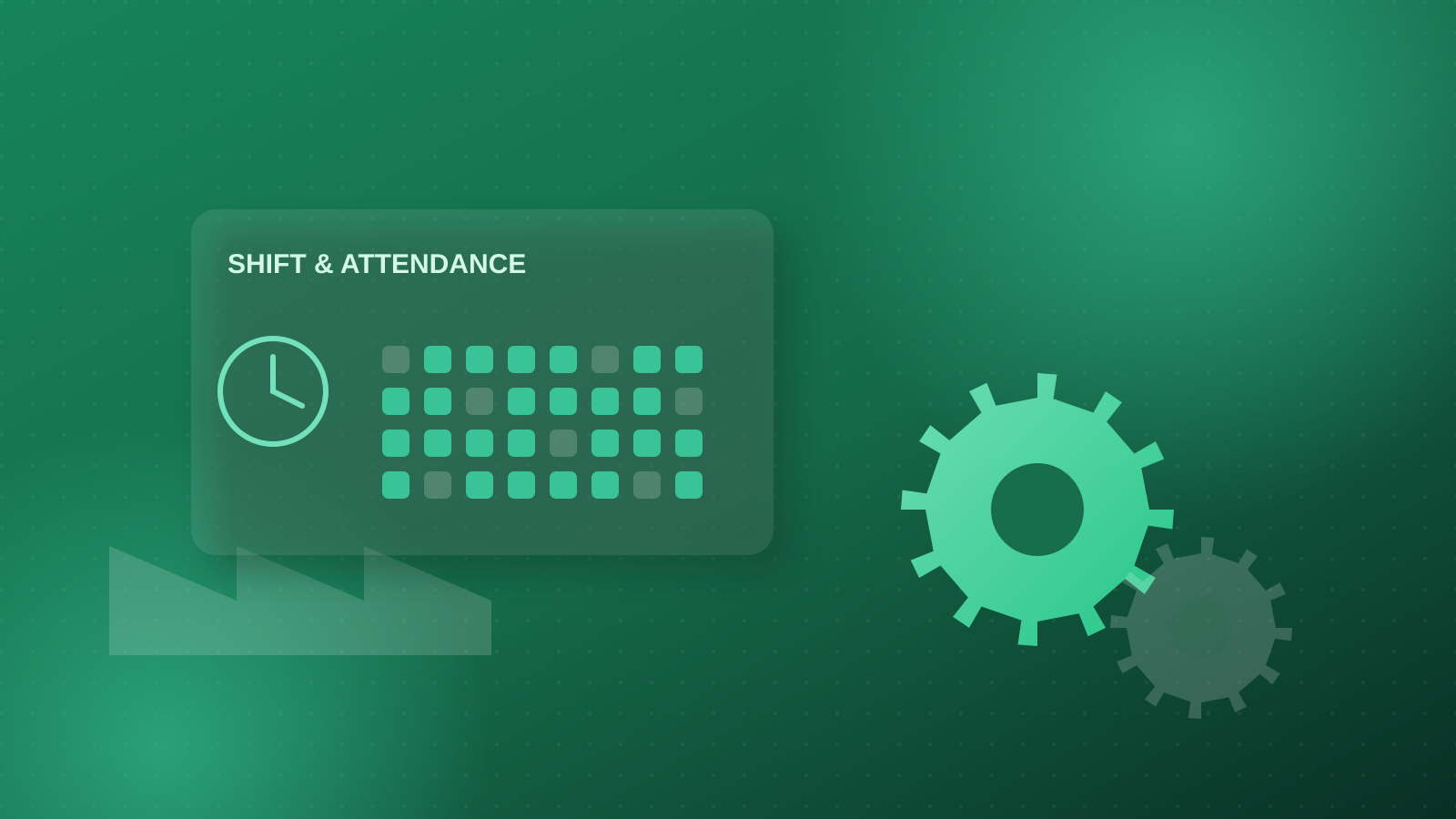
A factory does not keep one set of working hours. It keeps dozens. A cable plant running extrusion lines around the clock has three rotating shifts, a maintenance crew on a different pattern, a day-shift administration, and a security team on twelve-hour turns. A generic clock-in/clock-out system sees all of these people the same way: a timestamp in, a timestamp out, and a daily total. That is where the trouble begins.
The gap between a timestamp and a payable hour is the whole problem of manufacturing attendance. A worker who punched in at 06:52 for a 07:00 shift is not owed eight minutes of overtime. A worker who left at 15:10 because a line stopped early may or may not owe the company fifty minutes. A worker who swapped shifts with a colleague at the second plant should be paid for the shift actually worked, not the one on the roster. Every one of these decisions has a rule behind it, and the rule usually differs by plant, by line, by grade and by month of the year.
This article explains what attendance software has to do in a manufacturing environment, why simple time-clock tools fall short, and what to look for when you evaluate a system for several plants and a few thousand workers. It is written for HR directors, plant HR managers, finance leads who sign off the monthly wage bill, and IT teams who keep the devices talking to the system.
Why the timestamp is not the answer
A basic time clock answers one question: when did this person pass the device? It cannot answer the questions payroll actually needs. Which shift was this person scheduled on? Was the punch early, on time, or late against that shift? Did a supervisor approve the early leave? Is the extra hour overtime at a weekday rate, a rest-day rate, or a public-holiday rate? Was this a night shift that started on one calendar day and ended on the next?
In an office, most of these questions have trivial answers because everyone works roughly the same hours. In a factory, none of them do. HR teams with a basic system end up exporting punches to spreadsheets, applying the rules by hand, and re-keying totals into payroll. That process is slow, it depends on a few people who know the rules, and it is where most attendance disputes originate. The attendance system should carry the rules so that the spreadsheet is not needed.
Rotating shifts and multiple plants
The first thing a manufacturing attendance system must model is the shift calendar. A rotating pattern such as morning, afternoon, night, then rest, has to be assigned to a group of workers and rolled forward automatically. Each plant may run different patterns; a plant with a continuous process runs four crews on three shifts, while a plant with batch production may run two shifts and stop at weekends. The system needs to hold all of these at once, per plant and per department, and let a supervisor move a worker or a whole crew from one pattern to another from a given date.
Night shifts add a specific requirement: the system must attach a punch at 03:00 to the shift that started the previous evening, not to a new day. Systems built for offices frequently get this wrong, producing a "missing punch" on one day and an "unmatched punch" on the next. Shift swaps and temporary reassignments across plants are the other common failure. If a worker from one plant covers a shift at a second site, the punch from the second site's device must be recognised, matched to the right shift, and costed to the right cost centre. Ask any vendor to demonstrate exactly this scenario.
Line-based rules, overtime and shortage
Manufacturing pay rules are rarely uniform. A line that runs a continuous process may have a grace period of a few minutes and pay overtime from the first extra half hour, because stopping the line to change crews has a cost. A packing line may have a stricter lateness rule and no overtime without prior approval. Skilled technicians may earn a higher overtime multiplier than helpers. The attendance system should allow these rules to be defined as policies and assigned to groups of workers, rather than being hard-coded once for the whole company.
Overtime and shortage should be calculated automatically for every day, with the rule that produced each figure visible. "Shortage" here means the hours a worker fell short of the scheduled shift, whether through lateness, early leave or absence, and it typically results in a deduction. Both figures should be aggregated per pay period, categorised by rate type, and ready to post to payroll without editing. In Egypt, the legal ceiling of eight hours a day and forty-eight hours a week, and the overtime premiums that apply beyond them, are the baseline every policy must respect. In Saudi Arabia, the statutory overtime premium and the reduced Ramadan hours for Muslim workers shape the same rules differently.
Devices, biometrics and mobile punches
A plant is a hostile environment for devices. Fingerprint readers get dirty, gloves interfere with them, and a reader at a gate used by hundreds of people at shift change has to respond quickly. The attendance system should support multiple device types at multiple sites, receive punches from each in near real time, and cope with a device going offline for a day and then sending a backlog. If the system only supports one brand of device, or only one site per installation, that is a limiting factor for a multi-plant group.
Not every punch happens at a gate. Drivers, field maintenance teams, and staff at a small depot without a reader need another method. Mobile punching with geo-fencing, where the app only accepts a punch inside a defined radius of the site, solves this for most cases. Web punching serves office staff and supervisors. The important point is that all methods feed the same attendance record and the same rules, so that a mobile punch is treated exactly like a device punch when it comes to shift matching and overtime. Orgarise's Attendance module supports fingerprint and biometric devices alongside web and mobile punches with geo-fencing, and applies the same shift and policy logic to each source.
Ramadan, holidays and seasonal calendars
The working calendar in Egypt, Saudi Arabia and the GCC changes for Ramadan. Reduced hours for fasting workers, changed shift start times, and different overtime thresholds apply for a month whose dates move each year. A system that cannot switch a plant or a group of workers to a Ramadan calendar from a given date, and back again, forces HR to edit every schedule by hand twice a year. The same mechanism should handle public holidays, where working the day may attract a higher rate or a compensating rest day, and plant shutdowns for maintenance.
Seasonal demand is another calendar issue. A garment factory or a cable plant may add a temporary third shift for three months, or move to six working days a week during a peak order period. The attendance system needs to apply the new pattern from a date, calculate overtime correctly against the new baseline, and return to the standard pattern afterwards without losing history. Every one of these changes should leave an audit trail showing who made the change and when it took effect.
Supervisor approvals on the shop floor
A shift supervisor is the person who knows why a worker left early or stayed late. If the approval of overtime, early leave, absence justification and shift swaps has to go through an HR office two buildings away, approvals arrive late, and payroll runs with unresolved exceptions. The attendance system should put these approvals on the supervisor's phone or a shared terminal on the floor, with a queue of exceptions for their crew only, and a limit on what they can approve without escalation.
Approval chains matter here. Overtime above a certain number of hours per week may need the plant manager, not just the supervisor. Absence without justification beyond a certain count may need HR to trigger a disciplinary step. These chains should be configurable per plant and per policy, and every approval should be recorded against the attendance record it changed. This is also where a self-service portal helps: workers can see their own punches, request a correction, and follow the status of their request, which cuts the number of disputes that reach the HR office.
The handoff to payroll
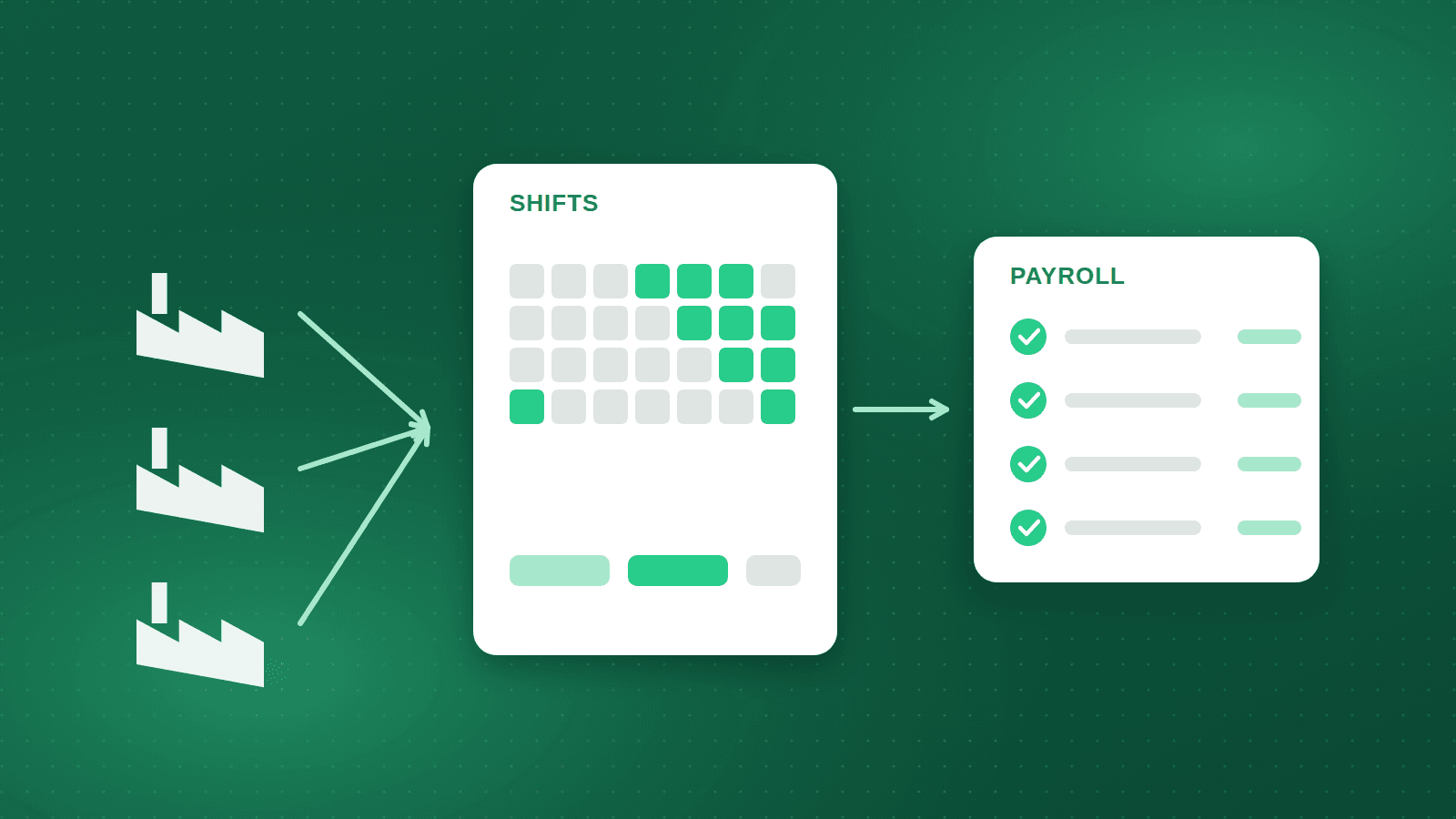
Attendance only matters because it changes pay. The handoff from attendance to payroll is where a basic system costs the most, because it is the point where manual totals are re-keyed, and where a mistake becomes a wrong salary. A manufacturing attendance system should close each period with a locked set of totals per worker: paid hours, overtime by rate type, shortage hours, approved and unapproved absences, and any allowances that depend on attendance such as shift or night premiums. These totals should post to payroll as line items, with a link back to the daily records that produced them.
Two further capabilities separate a serious system from a time clock. First, retroactive correction: when a supervisor approves a late justification after the period has closed, the system should recalculate the affected days and produce an adjustment in the next payroll run, rather than requiring a manual entry. Second, the payroll engine must apply the country's rules to the result: in Egypt, the effect of overtime on the social-insured wage and the income-tax brackets; in Saudi Arabia, GOSI contributions and the bank payment file for the wage-protection process. Orgarise's Attendance and Payroll modules are built as one system, so overtime and shortage calculated in attendance post directly to the payroll run, and the Egypt and Saudi tax and social-insurance engines apply to the result.
Giza Cable Industries is an example of what this looks like in practice. The company, established in 1993 in Giza, runs LV to EHV cable lines across several plants with more than a thousand employees, and uses Orgarise for attendance, payroll and personnel. The value of a combined system in that setting is not any single feature; it is that a shift worked at any plant, under any calendar, ends up in the right pay line without a spreadsheet in between.
What to test before you sign
When you evaluate a manufacturing attendance system, do not start with the feature list. Bring three real scenarios from your plants: a night shift that crosses midnight, a worker who swapped shifts and worked at a different site, and a Ramadan calendar switch for one plant. Ask the vendor to configure all three in front of you, run a month of sample punches through them, and show the payroll lines that result. If the answer involves a spreadsheet, a custom script, or "we will build that during implementation", you have learned what you need to know. The right system carries your rules; it does not hand them back to you.
Frequently asked questions
Can a manufacturing attendance system handle night shifts that cross midnight?
Yes, if it is built around shift calendars rather than calendar days. The system should attach an early-morning punch to the shift that began the previous evening and calculate hours against that shift. Test this specifically in any demo, because office-oriented systems often produce false missing-punch errors here.
What happens when a fingerprint device goes offline at one plant?
A well-designed system stores punches on the device and uploads them when the connection returns, then matches them to the correct shifts retroactively. HR should be alerted to the gap so that the day is not closed with missing data. Ask the vendor how long a device can stay offline before records are lost.
How should Ramadan hours be handled in a plant with both Muslim and non-Muslim workers?
The system should let you assign a Ramadan calendar to a group of workers rather than to the whole plant, so reduced hours apply to those entitled to them while others keep their standard shifts. Overtime thresholds should follow the calendar each worker is on. The switch should be date-driven so it can be prepared in advance and reversed automatically.
Do we still need to review attendance totals before payroll if the system is integrated?
Yes, but the review changes character. Instead of building totals, HR reviews exceptions: unapproved overtime, unresolved missing punches, and unusual patterns. Once the period is locked, the totals post to payroll without re-keying, and any later corrections flow through as adjustments in the next run.
Giza Cable Industries — 1,000+ employees
A leading Middle-East cable manufacturer unifies attendance and payroll across its plants on one HR platform.
1,000+
Employees on one platform
LV–EHV
Production lines, low to extra-high voltage
Multi-site
Plants on one attendance calendar
See how Orgarise handles this
A 30-minute demo on your own scenario, in Arabic or English.