What Makes an HRMS Truly Enterprise-Ready?
"Enterprise-ready" appears on almost every HR software website, and it rarely comes with a definition. For a buyer at a 2,000-employee manufacturer or a 5,000-employee services group, that vagueness is a real problem. The difference between a system that copes with your organisation and one that merely looks good in a demo only shows up after go-live, when changing course is expensive.
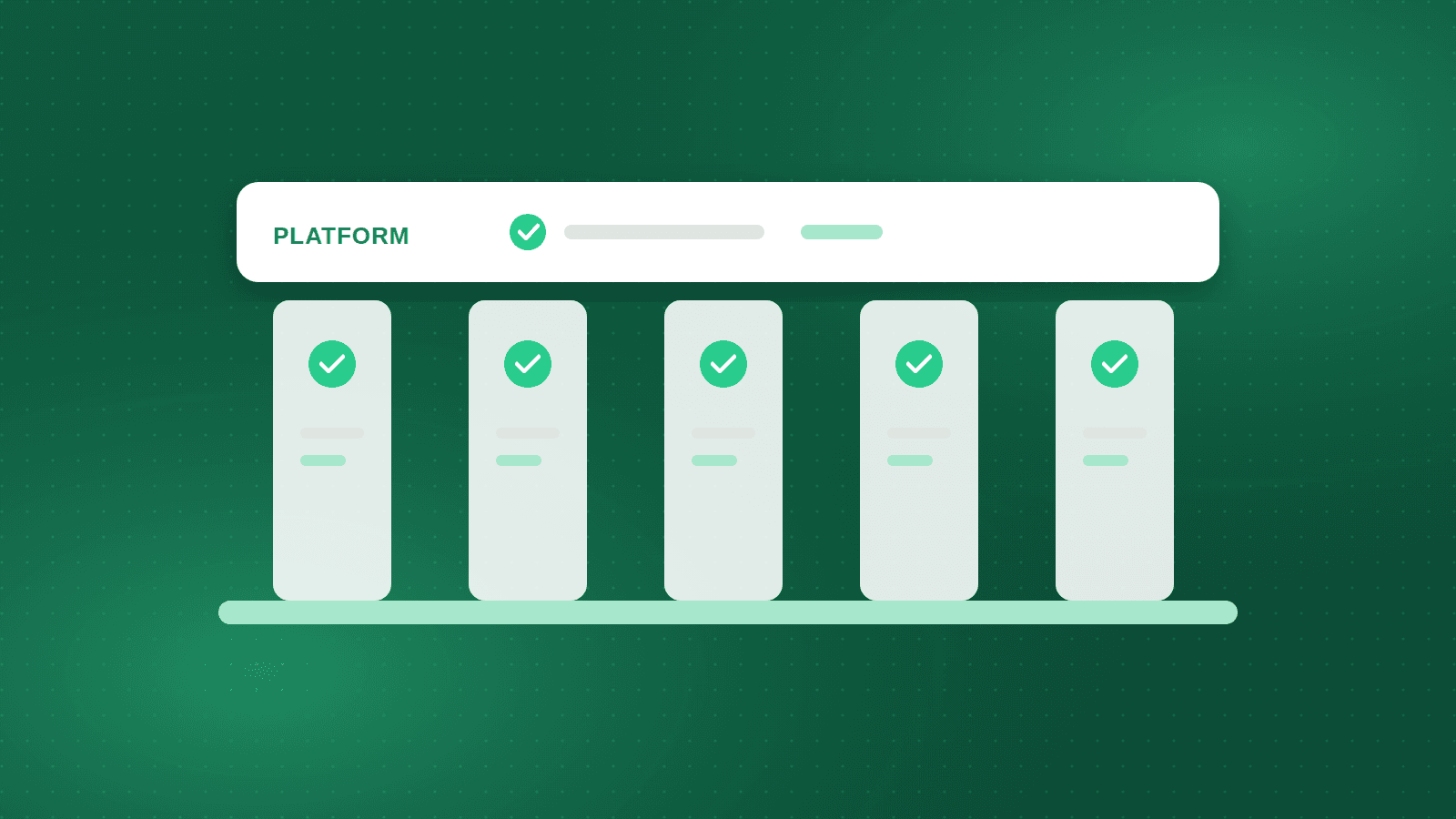
This article proposes a working definition. An HRMS is enterprise-ready when it holds up on seven pillars: security and access control, scale across entities and headcount, localisation for the countries you operate in, integration with the systems around it, a complete audit trail, configurability without custom code, and an implementation partner who has done this before. Every one of these can be tested before a contract is signed.
The tests matter more than the pillars. Any vendor will say yes when asked "do you support multiple entities?". Fewer will let you load your own organisation chart during the evaluation and watch what happens. The sections below describe what to look for under each pillar and, more importantly, how to check it with your own data.
Pillar 1: Security and access control
Enterprise HR data is among the most sensitive data a company holds: national ID numbers, salaries, bank accounts, medical leave, disciplinary records. The first question is not whether the system encrypts data at rest; almost every modern platform does. The question is whether access control matches the shape of your organisation.
In a large organisation, permissions are not a flat list of users and roles. An HR business partner for the Alexandria plant should see Alexandria employees and nothing else. A payroll officer should see salaries but not appraisal comments. A line manager should approve leave for their direct reports and see the team's attendance, but never open a colleague's payslip. A group CHRO should see everything across all entities. The system has to express all of these at once: by organisational unit, by data field, and by action.
How to test it: give the vendor three real roles from your organisation and ask them to configure them in front of you. Then log in as each role and try to reach something that should be out of bounds. Ask how role assignments are reviewed, how a leaver's access is revoked, and whether every login and every data export is logged. Ask where the data physically sits and whether an on-premise or private deployment is available if your policy requires it.
Pillar 2: Scale across entities and headcount
Headcount is the obvious scale question, and it is the less interesting one. A system that runs payroll for 500 employees will usually run it for 5,000; the calculation just takes longer. The harder scale problem is structural. Enterprises are groups: several legal entities, sometimes in more than one country, each with its own registration, payroll calendar, insurance rules, and bank. Employees move between them, managers report across them, and group reporting has to consolidate them.
An enterprise-ready organisational model holds legal entities, business units, departments, positions, and grades as separate objects, and lets a position exist before a person fills it. It records reporting lines that are not the same as the legal entity structure, because a regional finance manager often reports to a group CFO in a different company. It keeps history, so that a query about headcount on a given date last year returns the structure as it was then, not as it is now.
How to test it: load your real organisation chart, or a representative branch of it, during the evaluation. Create a new entity. Transfer an employee between two entities with different payroll rules and check what happens to their service date, leave balance, and end-of-service accrual. Run a group headcount report and a single-entity headcount report and confirm they reconcile. Ask what the largest organisation on the platform looks like in terms of entities and employees, not just users.
Pillar 3: Localisation that goes beyond translation
A translated interface is the entry ticket, not the destination. In Egypt, Saudi Arabia and the wider GCC, localisation means the statutory logic of each country is built into the system and maintained as the law changes. In Egypt that includes progressive income-tax brackets, social-insurance contributions with an insured-wage floor and ceiling, the 8-hour day and 48-hour week limits, and the requirements of Labour Law 14 of 2025, in force since 1 September 2025: the mandatory annual increment on the social-insured wage, Arabic contracts in four copies, and five-year record retention. In Saudi Arabia it includes GOSI contributions by nationality, reduced Ramadan working hours, the end-of-service award on the statutory scale, the overtime premium, and bank payment files in the format the wage-protection process expects.
Localisation also reaches the documents. HR letters, contracts, payslips, and reports have to come out in Arabic when the employee or the authority needs Arabic, and in English when the auditor or the regional office needs English, without a second template maintained by hand. A system that translates its menus but prints payslips only in English will generate manual work for as long as you use it.
How to test it: take a real month of payroll for one entity and run it in the candidate system in parallel with your current process. Compare gross-to-net for a sample of employees across grades and nationalities. Ask the vendor to show the last three statutory changes they released and when they released them relative to the effective date. Print a contract, a payslip, and an experience letter in both languages.
Orgarise is built for exactly this scope: Arabic and English end to end, including interface, documents, payslips, and reports, with configurable tax and social-insurance engines for Egypt and for Saudi Arabia and the GCC. The test above is the one to run against it, or against any other candidate.
Pillar 4: Integration
No HRMS runs alone. Finance needs payroll journals by cost centre. The bank needs a payment file. Attendance devices need to feed hours into pay. Identity systems need to know who joined and who left. An enterprise-ready system treats these as standard connections, not as projects.
The most important integration is usually the one inside the HR domain itself: attendance to payroll. When overtime, shortages, shift premiums, and leave flow automatically into the pay run, the month-end reconciliation that consumes payroll teams disappears. When they flow through a spreadsheet, the enterprise is paying for two systems and a manual bridge between them.
How to test it: list every system the HRMS will exchange data with and ask for a demonstrated example of each, not a slide. Ask for the payroll journal file and check it against your chart of accounts. Ask what happens when the ERP rejects a posting. Ask whether the vendor's own attendance and self-service modules post directly to payroll or through an export.
Pillar 5: Audit trail and configuration without custom code
Two pillars share a section because they pull in the same direction: the enterprise wants to change the system freely and still be able to explain every change afterwards.
Audit first. Every edit to a salary, a grade, a bank account, or a leave balance should record who changed it, when, from what value to what value, and under which approval. Every payroll run should be reproducible: the same inputs, months later, must give the same outputs. Every approval chain should leave a record that an internal auditor can follow without asking IT to query the database. This is what allows a CFO to sign off payroll and an HR director to answer a labour inspector.
Configuration second. Enterprises change constantly: a new allowance, a new appraisal template, a new approval step for hires above a certain grade. If each of these needs the vendor to write code, the change queue becomes the bottleneck and the cost grows every year. An enterprise-ready system has built-in designers for salary structures, approval chains, appraisal sheets, letters, and forms, so that a trained HR administrator can make the change, test it, and put it live.
How to test it: change something during the evaluation. Add an allowance to a salary structure, add a step to an approval chain, and build a short appraisal form. Then open the audit log and find your own changes. If the vendor has to take the request away and come back later, you have learned what the next five years will look like.
Orgarise follows this pattern: salary structures, approval chains, appraisal sheets, letters, and forms are built with built-in designers rather than custom code. That is what keeps the monthly stream of small changes inside the HR team.
Pillar 6: The implementation partner
The software is half of enterprise-readiness. The other half is the team that configures it, migrates your data, trains your users, and answers the phone in the first payroll month. A well-known global system implemented by a partner who has never run Egyptian payroll is not enterprise-ready for an Egyptian enterprise, whatever the brochure says.
Ask who will actually do the work, where they sit, and how many implementations of your size and in your country they have completed. Ask for a reference customer with a similar structure and call them. Ask what the customer is expected to provide, in what format, and by when; a realistic partner will give you a list and a timeline rather than a promise. For a mid-market organisation, a go-live of two to six weeks depending on modules and data is achievable when both sides do their part. An enterprise with many entities and a long payroll history should plan for longer and ask the partner to explain the difference.
Staff Arabia, a Cairo HR outsourcing and payroll provider operating since 2000, supports more than 33,000 employees across client companies in MENA, Africa and Asia on Orgarise. Their scale question was not one large entity but many client companies with different rules; their feedback highlights geo-fenced mobile punching and improved payroll accuracy. That is the kind of reference conversation to have before choosing a partner.
Takeaway: test the pillars, not the demo
Write the seven pillars on one evaluation sheet and put the test you want to see next to each. Score every candidate on what you saw with your own eyes, not on what you were told. Give priority to the tests that use your own data: your organisation chart, a real payroll month, your actual roles.
A system that scores well on all seven in your hands, with your data, is enterprise-ready for your organisation, whatever the website says. A system that scores well on six and fails on localisation or on the implementation partner will cost you years of manual workarounds. That difference is worth an extra week of evaluation.
Frequently asked questions
Does "enterprise-ready" mean the HRMS has to be cloud-based?
No. Deployment is a separate decision from readiness. Some organisations require on-premise or private hosting for policy or data-residency reasons, and an enterprise-ready vendor should offer that option and be able to explain the trade-offs in cost, upgrades, and support.
At what headcount does an organisation need an enterprise-ready HRMS?
Headcount alone is not the trigger. The need appears when structure becomes complex: several legal entities, more than one country, layered approval chains, or auditors asking questions the current tools cannot answer. Many organisations reach that point well before 1,000 employees.
How can we test localisation without a full implementation?
Run one real payroll month for one entity in the candidate system during the evaluation and compare it line by line with your current results. Print a contract, a payslip, and a letter in both Arabic and English. Ask the vendor when they released their last statutory updates relative to the legal effective dates.
What should we ask a reference customer?
Ask how long the implementation took against the original plan, what data problems they hit, how statutory changes have been handled since go-live, and how quickly support responds during payroll week. A reference with a similar structure and country is worth more than a larger name elsewhere.
Staff Arabia — 33,000+ employees supported
A leading regional HR-outsourcing provider runs compliant payroll for its clients on Orgarise.
33,000+
Employees supported
Since 2000
HR-services expertise
3 regions
MENA, Africa and Asia
See how Orgarise handles this
A 30-minute demo on your own scenario, in Arabic or English.