The complete guide to HR automation for MENA companies
HR automation in the MENA region has a specific shape. Labour laws differ by country, payslips must often be bilingual, social insurance and end-of-service rules change, and workforces mix office, field and shift-based teams. Generic global tools rarely fit without heavy customisation.
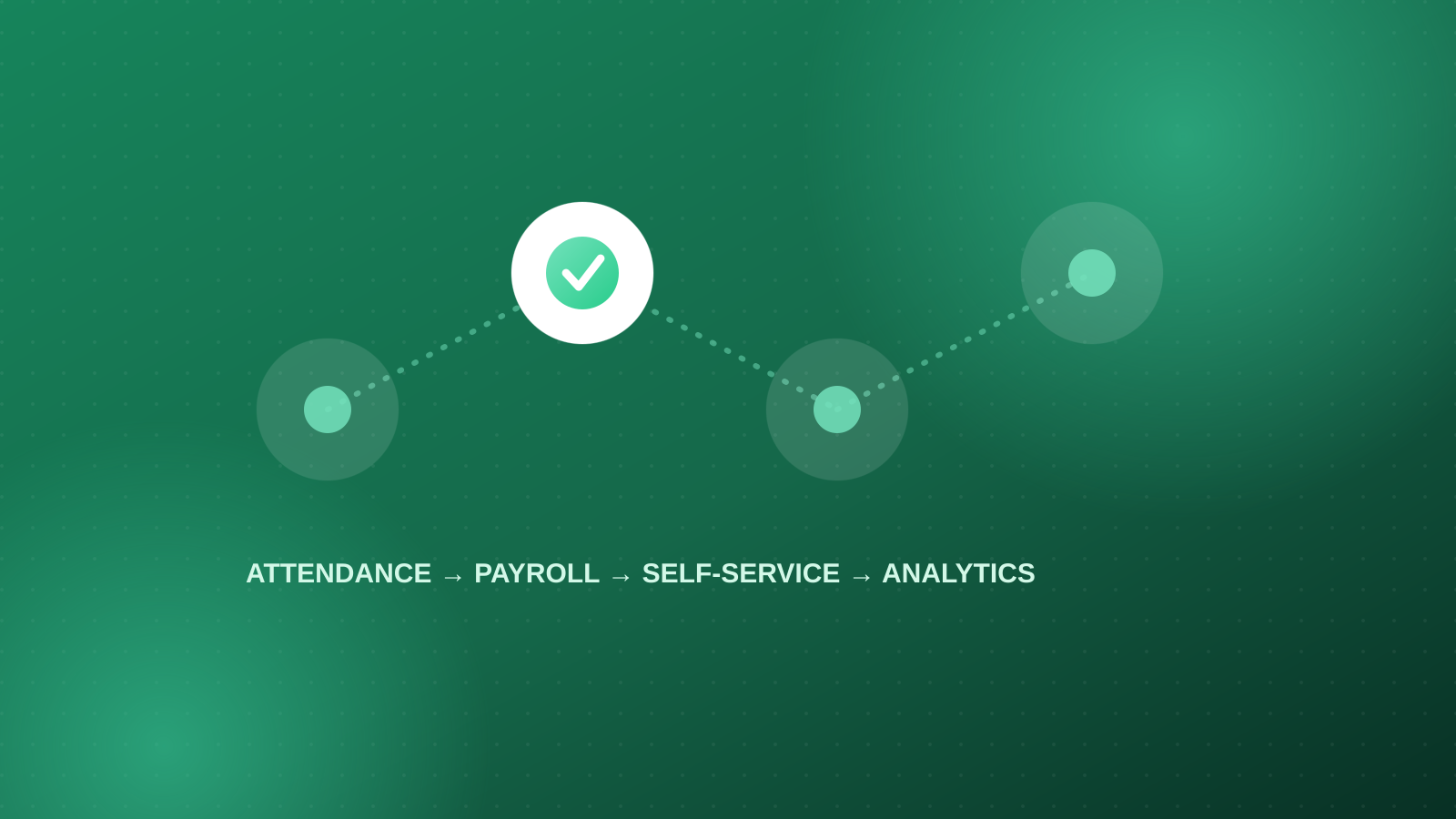
Start with attendance. Connecting fingerprint devices, mobile clock-in and shift calendars to automatic calculation removes the single largest source of payroll disputes. Once attendance results flow into payroll without spreadsheets, the monthly cycle shrinks from days to hours.
Automate payroll second. A configurable tax engine that models your country's brackets, exemptions and social insurance — and recalculates retroactively when changes are backdated — eliminates the errors that erode employee trust fastest.
Then move to self-service. Every leave request, salary letter and balance enquiry an employee can handle in a portal or chat assistant is a ticket HR never receives. Companies typically see the HR inbox shrink by more than half within the first quarter.
Finally, add intelligence: dashboards for headcount and cost, alerts for expiring contracts and documents, and conversational analytics for leadership. The goal is not fewer HR people — it is HR people doing the work only humans can do.