Payroll and Attendance: Integrated Platform or Separate Systems?
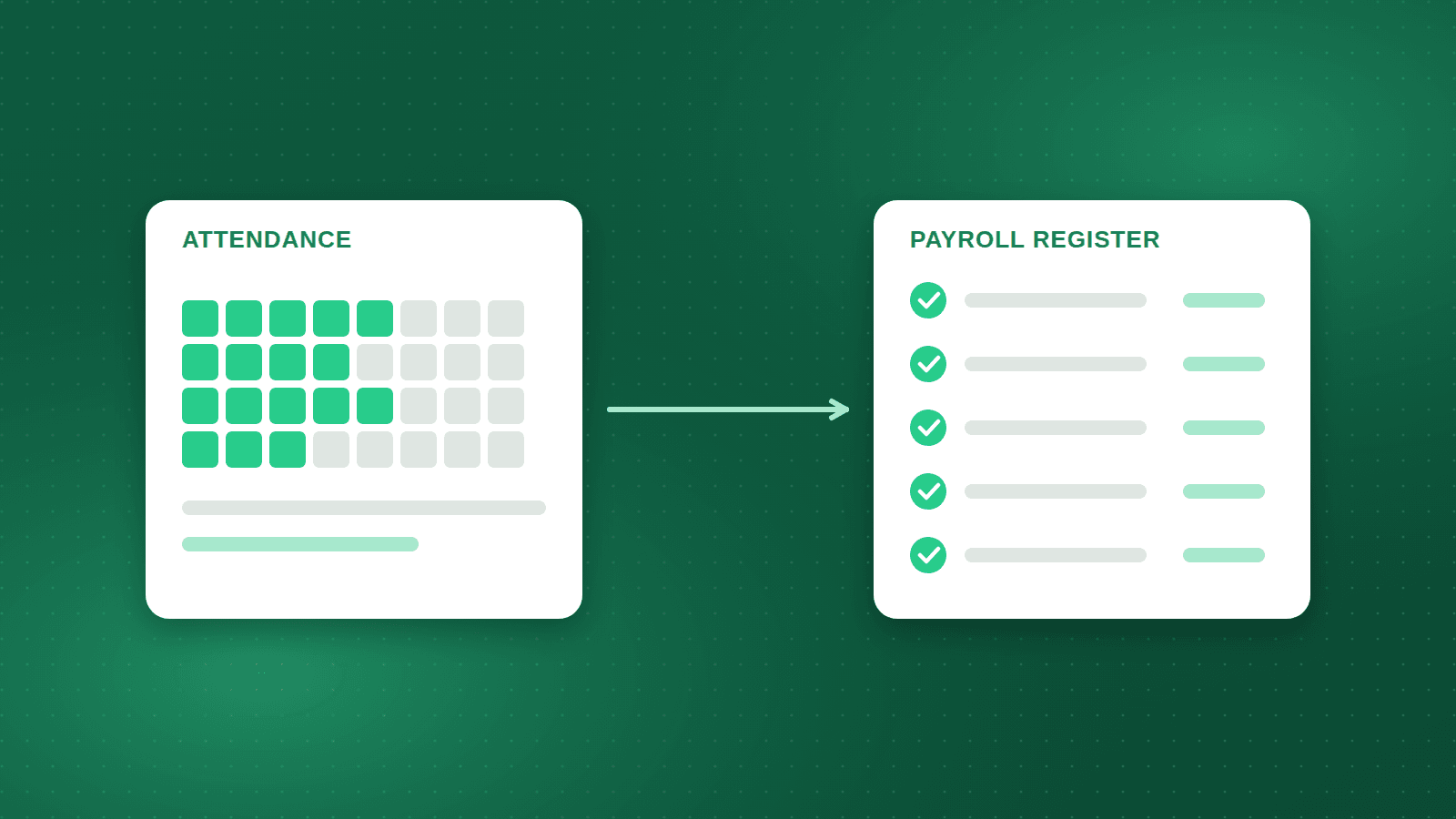
Every month, in every organisation with hourly workers, shift staff or overtime, the same handoff happens: attendance data becomes pay. Punches turn into worked hours, worked hours turn into overtime and shortage, leave turns into paid or unpaid days, and shift patterns turn into premiums. How well that handoff works decides whether payroll closes on time and whether employees trust their payslip.
Many organisations in Egypt, Saudi Arabia and the GCC run attendance in one system and payroll in another, with a spreadsheet or an export file between them. Others run both on one platform. This article looks at what actually happens in the handoff, where separate systems fail, what a real integration should do, and which questions to put to vendors before you decide.
The answer is not always the same. There are cases where separate systems are right. But the decision should be made with a clear view of the monthly cost of the bridge between them, which is usually higher than it looks.
What actually crosses from attendance into pay
Start by listing what payroll needs from attendance. Worked days for daily-rated workers. Overtime hours, split by rate where the law or policy pays different premiums for weekdays, rest days and public holidays. Lateness and early leaving, converted to deductions according to policy. Unpaid absence. Paid leave, sick leave and their balances. Shift premiums for night or rotating shifts. In Saudi Arabia, reduced Ramadan hours change the baseline against which overtime is measured; in Egypt, the statutory limits of eight hours a day and forty-eight a week set the boundary for what counts as overtime.
Each of these is a calculation, not a raw punch. Someone has to decide that a punch at 07:52 against an 08:00 shift is on time, that a missing exit punch on a night shift is a device failure rather than an early departure, and that a Friday worked in a rotating plant is a rest day for that worker or a normal day. Those rules live in policy. The question is whether they are applied by the system, by a spreadsheet, or by a person at month-end.
The manual bridge and its failure modes
The most common architecture is not really two systems. It is two systems plus a person. The attendance system exports a file; a payroll officer opens it, cleans it, applies the exceptions they know about, and keys the totals into payroll. It works because that person is diligent. It fails in predictable ways.
The first failure is timing. Attendance is closed on a cut-off date, but corrections keep arriving: a supervisor approves a missed punch on the twenty-eighth, a leave request is backdated, a device at one plant is found to have been offline for two days. Each correction after export either waits until next month or is applied by hand outside the system, where no record of it survives.
The second failure is rule drift. The spreadsheet encodes policy as formulas that were right when they were written. Overtime rates change, a new shift pattern is introduced, a public holiday falls on a rest day. The formula is patched, or not. Over a year, the spreadsheet and the written policy diverge, and nobody can say which one payroll actually follows.
The third failure is traceability. When an employee disputes a deduction, the payroll officer needs to show the punches, the rule and the calculation. With a manual bridge the punches are in one place, the rule is in a spreadsheet and the result is in payroll. Reconstructing the chain takes hours, and often the answer is that the figure was adjusted by hand for a reason nobody remembers.
What an integrated platform should actually do
Integration is not the same as an export button. When a vendor says attendance is integrated with payroll, ask what that means in practice. At a minimum, the attendance module should calculate overtime, shortage, absence and leave according to configured rules, and the payroll module should read those results as pay elements for the period without any re-keying. The calculation should be repeatable: run it twice and get the same answer.
Beyond that, a real integration handles the corrections. If a punch is corrected after the attendance period is posted, the platform should recalculate that employee's figures and carry the difference into the next payroll run as a retroactive adjustment, with the original and corrected values both visible. If a leave request is approved late, its effect on pay should follow the same path.
The integration should also run in both directions where it matters. Payroll needs to know an employee's shift, grade and daily rate to price the hours; attendance needs to know hire dates, terminations and leave balances to interpret the punches. When both modules share one employee record, this is automatic. When they are separate, every one of these fields needs a synchronisation that can fail silently.
What posted to payroll should mean
The phrase posted to payroll deserves a precise definition, because vendors use it loosely. A useful definition has four parts. First, the attendance period is closed with an approval, so the figures cannot change without a new version. Second, the calculated pay elements appear in the payroll run for that period automatically, tagged to the employee and the period. Third, any later correction creates a visible adjustment rather than overwriting the posted figure. Fourth, a payroll officer can open any figure and see the punches, shifts and rules that produced it.
If a vendor cannot show all four in a demo, the platform is doing an export with a nicer button. That is not necessarily disqualifying, but it means the reconciliation work stays with your team.
Orgarise is built around this definition. Its Attendance module collects punches from fingerprint and biometric devices, and from web and mobile with geo-fencing, applies rotating shift calendars and Ramadan hours, and calculates overtime and shortage automatically. Those results are posted to the Payroll module, which applies the Egyptian or Saudi tax and social-insurance rules and handles retroactive recalculation when a correction arrives after posting.
Reconciliation: the monthly control that tells you whether it works
Whether you run one platform or two, reconciliation is the control that catches errors before employees do. The basic reconciliation compares three numbers for every employee: scheduled hours from the shift calendar, worked hours from attendance, and paid hours from payroll. The differences should be explained by leave, overtime, absence and approved exceptions, and nothing else.
On an integrated platform this reconciliation can be a standard report, run before the payroll is approved. With separate systems it is a project: exports from both sides, matched by employee code, with the inevitable mismatch of codes, periods and rounding. The reconciliation is where the true cost of separate systems appears, because it is repeated every month and grows with headcount.
A useful discipline is to count exceptions. How many employees each month need a manual adjustment between attendance and pay? If the number is in the hundreds for a workforce of a thousand, the rules are not encoded in the system, and the platform is not doing the work. Giza Cable Industries, which runs several cable plants with more than a thousand employees on Orgarise, moved attendance and payroll onto one platform for exactly this reason: attendance figures now reach the pay run without the retyping that produced month-end corrections.
When separate systems are still the right choice
There are honest cases for separation. If payroll is outsourced to a specialist provider, attendance may stay in-house and the handoff becomes a defined file exchange with the provider, which can work well when the file format is agreed and versioned. If a group has entities in countries where a single platform cannot handle the local payroll rules, running local payroll separately may be the only compliant option. And if the existing attendance hardware is tied to a proprietary system that cannot be replaced yet, an integration through a file or an API is a reasonable interim step.
The condition in all these cases is that the handoff is designed rather than improvised. The file has a fixed format, a fixed cut-off, an owner and a reconciliation step. Corrections after the cut-off have a defined path. If those conditions are met, separate systems can be reliable. If they are not, the arrangement is a manual bridge with extra steps.
Questions to put to vendors
Ask each vendor to run a month of your real attendance data through their system, with your shift patterns, and show the payroll run that results. Ask them to correct a punch after posting and show what happens. Ask them to show a night shift that crosses midnight, a Ramadan schedule, and a public holiday worked on a rest day. Ask what a payroll officer sees when tracing a single deduction back to its source.
Then ask the operational questions. How is a device that goes offline handled? Can the attendance period be closed per site, or only for the whole company? Who can reopen a closed period, and is that logged? Can overtime rules differ by grade, by entity and by country? Are the calculated figures visible to the employee in a self-service app in Arabic, so that disputes arrive before payroll closes rather than after?
Finally, ask about the people. Who configures the attendance rules at go-live, how long it typically takes, and what your team needs to prepare. For a mid-market organisation, implementing attendance and payroll together is commonly measured in weeks rather than months when the shift data and salary structures are ready.
The practical takeaway: count the corrections
If you want a single measure of whether your current setup is working, count the manual corrections between attendance and payroll last month. Each one represents a rule that is not in the system, a timing gap that is not handled, or a device problem that is not caught. An integrated platform reduces that count by putting the rules, the corrections and the audit trail in one place. Separate systems can reach the same result only with a designed and owned handoff. Choose the option that gets the count down, and test it with your own data before you sign.
Frequently asked questions
Can we keep our existing attendance devices if we move payroll to an integrated platform?
Usually yes. Most fingerprint and face devices export punches in standard formats or connect directly to the platform. Ask the vendor which device models they have integrated before and what happens when a device is offline.
What is the difference between an export and an integration?
An export moves totals from one system to another and leaves corrections, traceability and reconciliation to people. An integration calculates pay elements from configured rules, posts them automatically, handles corrections as visible adjustments and lets a payroll officer trace any figure back to the punches.
How do we handle corrections after payroll has closed?
The platform should recalculate the affected employee's figures and carry the difference into the next run as a retroactive adjustment, keeping both the original and corrected values. If corrections are applied by hand outside the system, they will not survive an audit.
Is an integrated platform still worth it if payroll is outsourced?
It can be, if the provider accepts a structured file from your attendance system with a fixed format, cut-off and owner. What matters is that the handoff is designed and reconciled monthly, not improvised by a person at month-end.
Giza Cable Industries — 1,000+ employees
A leading Middle-East cable manufacturer unifies attendance and payroll across its plants on one HR platform.
1,000+
Employees on one platform
LV–EHV
Production lines, low to extra-high voltage
Multi-site
Plants on one attendance calendar
See how Orgarise handles this
A 30-minute demo on your own scenario, in Arabic or English.